Showing posts with label bbc report. Show all posts

Saturday, 12 November 2016

Dog's dinner: DNA clue to how dogs became our friends

Dogs like to scrounge from humansDogs have been dining on human food scraps since the early days of their domestication, it appears.
Our canine companions developed the ability to digest starchy foods during the farming revolution thousands of years ago, according to DNA evidence.
Scientists think dogs may have been domesticated from wolves when they came into settlements, scrounging for food.
Modern dogs can tolerate starch-rich diets, unlike their wolf cousins, which are carnivores.
A study of DNA extracted from the bones and teeth of ancient dogs at archaeological sites in Europe and Asia suggests their ability to eat starchy foods goes back millennia.
Lead researcher Dr Morgane Ollivier of ENS de Lyon, France, said human cultural development has influenced the first domesticated animal, the dog.
DNA samples from 8,000 to 4,000 years ago show the dog's ability to digest starch is ancient - hailing back to a time when hunter-gatherer societies adopted agriculture.-read more

Tongtianlong limosus,-Unknown dinosaur almost blown to oblivion

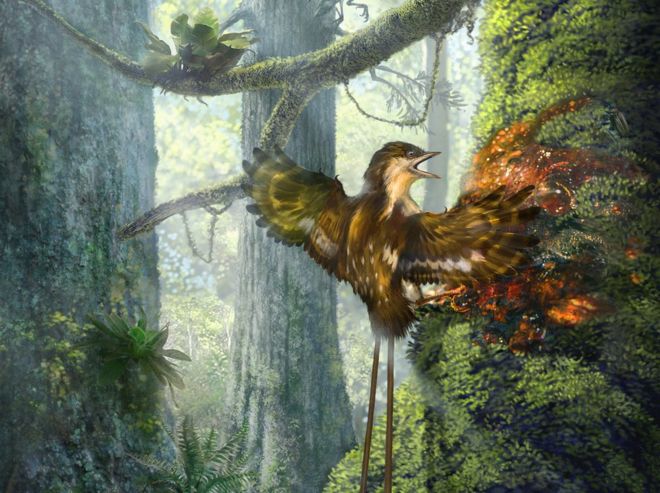
Newly discovered dinosaur, Tongtianlong limosusA newly discovered species of dinosaur has been identified from an extraordinarily complete Chinese fossil almost destroyed by dynamite.
It was preserved raising its beaked head, with feathered wings outstretched in the mud it was mired in when it died 72 million years ago.
The new creature has been named Tongtianlong limosus, "muddy dragon on the road to heaven".
"It was found at a construction site by workmen when they were dynamiting, so they nearly blasted this thing off the hillside," said University of Edinburgh palaeontologist Dr Stephen Brusatte.
"We almost never knew about this dinosaur."read more

UK red squirrels carry 'a form of leprosy' - scientists

The effects of the disease can be seen on the squirrel's ear and muzzleBritish red squirrels are infected with two different strains of the bacterium that causes leprosy, according to a study.
Leprosy was thought to have died out in the UK in medieval times, but these recent discoveries confirm that red squirrels carry the disease.
Despite this, researchers are keen to stress that the squirrel infection poses little, if any, threat to humans.
The research is published in the journal, Science.
In 2014 scientists studying red squirrel populations in Scotland noticed that some of the animals had abnormal growths on their ears, snout and limbs.
"We found that they were suffering from a form of leprosy," Prof Anna Meredith from the University of Edinburgh told the BBC's Science in Action.
The red squirrel is an endangered species found across Eurasia.
UK populations are especially under threat due to habitat loss, as well as through direct competition and the deadly effects of squirrel poxvirus following the -read more

Saturday, 17 September 2016

Tool-using crow: Rare bird joins clever animal elite

A bird so rare that it is now extinct in the wild has joined a clever animal elite - the Hawaiian crow naturally uses tools to reach food.
The bird now joins just one other corvid - the New Caledonian crow - in this exclusive evolutionary niche.
Dr Christian Rutz from St Andrews University described his realisation that the bird might be an undiscovered tool user as a "eureka moment".
"I've been studying New Caledonian crows for over 10 years now," Dr Rutz told BBC News. "There are more than 40 species of crows and ravens around the world and many of them are poorly studied.
"So I wondered if there were hitherto undiscovered tool users among them."
Previously, Dr Rutz and his colleagues have reported that New Caledonian crows have particular physical features - very straight bills and forward-facing eyes. The researchers suggested these might be tool-using adaptations.read more and watch video

Dinosaur's camouflage pattern revealed

3-D reconstruction of PsittacosaurusScientists have recreated the colour patterns of a dinosaur, revealing a camouflage used by animals today.
A study of a well-preserved Chinese Psittacosaurus fossil shows it had a light underside and was darker on top - an arrangement called counter-shading.
This suggests the species lived in an environment with diffuse light, such as a forest.
As part of their research, the scientists teamed up with an artist to produce a 3-D model of the creature.
The findings by an international team of researchers have been published in Current Biology journal.
Co-author Jakob Vinther, from the University of Bristol, UK, said the camouflage pattern sported by this particular dinosaur "has been shown to function by counter-illuminating shadows on a body, thus making an animal appear optically flat to the eye of the beholder".read more

Saturday, 10 September 2016

Giraffe genetic secret: Four species of tallest mammal identified

GiraffeIt is a famous, gentle giant of the African savannah, but the giraffe's genetics have just revealed that there is not one species, but four.
Giraffes have previously been recognised to be a single species divided into several sub-species.
But this latest study of their DNA suggests that four groups of giraffes have not cross-bred and exchanged genetic material for millions of years.
This is a clear indication that they have evolved into distinct species.
The study published in the journal Current Biology has rewritten the biology of Earth's tallest mammal.
The scientists say their findings could inform the conservation efforts for all four species of giraffe.
Conservation was the catalyst for this genetic research; the Giraffe Conservation Foundation asked the team to carry out genetic analysis of giraffes in Namibia.
The foundation wanted to understand the genetic differences between different giraffe populations, to see how the animals might be affected if different subspecies were mixed together when animals were moved into protected areas.read more

Saturday, 20 August 2016

Water voles: National Trust releasing 100 in Yorkshire Dales

Water voleAbout 100 water voles are to be released in the Yorkshire Dales.
Ecologists from the National Trust plan to release the new colony into Malham Tarn, England's highest freshwater lake.
It will be the first time voles have been in high Yorkshire Dales in 50 years.
Vole numbers have dropped by almost 90% in recent decades, and they have become one of the UK's most threatened mammals.
The animals being released have been bred in captivity and will be introduced in batches over five days.
They will spend two days in cages along the banks of the lake, before the cage doors are opened on the third day.

'Perfect habitat'

Ecologists will place apples and carrots on floating rafts near the cages to tempt the voles out into their new environment.-read more

Saturday, 13 August 2016

Tooth in poo suggests ancient shark ate its young

illustration of prehistoric sharkScientists have discovered a baby tooth in the fossilised faeces of a prehistoric shark, and concluded that the animals ate their own young.
This rare evidence of "filial cannibalism" was only revealed because the shark's corkscrew-shaped rectum produced dung in a distinctive spiral.
One such dropping, collected in Canada, holds a tiny tooth of the same species.
These Orthacanthus sharks lived in coastal swamps and may have resorted to cannibalism as they expanded inland.

Swampy sharks

The macabre sample was gathered by University of Bristol masters student Aodhan Ó Gogáin, now studying for a PhD at Trinity College Dublin, as part of a wider investigation into prehistoric fish on the coast of New Brunswick.
Like much of North America and Europe, this land used to sit near the equator and was thick with tropical jungles.-read more

400-year-old Greenland shark ‘longest-living vertebrate’

sharkGreenland sharks are now the longest-living vertebrates known on Earth, scientists say.
Researchers used radiocarbon dating to determine the ages of 28 of the animals, and estimated that one female was about 400 years old.
The team found that the sharks grow at just 1cm a year, and reach sexual maturity at about the age of 150.
The research is published in the journal Science.
Lead author Julius Nielsen, a marine biologist from the University of Copenhagen, said: "We had our expectations that we were dealing with an unusual animal, but I think everyone doing this research was very surprised to learn the sharks were as old as they were."
The former vertebrate record-holder was a bowhead whale estimated to be 211 years old.
But if invertebrates are brought into the longevity competition, a 507-year-old clam called Ming holds the title of most aged animal.

Slow swimmers

Greenland sharks are huge beasts, that can grow up to 5m in length.
They can be found, swimming slowly, throughout the cold, deep waters of the North Atlantic.-read more

Hundreds of tiny Montserrat tarantulas hatch in zoo

Montserrat tarantulas matingA clutch of about 200 Montserrat tarantulas has hatched at Chester Zoo - the first time this rare spider has been bred in captivity.
Very little is known about the species, found on just the one Caribbean island.
A dozen of the hairy brown animals were brought back by a zoo keeper in 2013, after observing them in the wild on multiple field trips.
Three years later, after much study and behavioural management, one female has produced 200 British-born baby spiders.
"It's kind of a race against time, whether you can synchronise the sexual maturity between individuals," said Chester Zoo's curator of lower vertebrates, Gerardo Garcia.

'Popping out of the earth'

Part of the problem is that male Montserrat tarantulas live for about 2.5 years at the most, whereas the females live much longer and develop much more slowly.
The few males Dr Garcia had collected, therefore, were a precious resource. There were nervous moments for the team when they started match-making.
As with many other invertebrates, those encounters were risky for the males.
"The female can take it as a prey, rather than a partner," Dr Garcia told the BBC. "There were a lot of sweaty moments."-read more

Saturday, 23 July 2016

Twycross Zoo begins great ape heart disease study

Researchers are to look into why great apes are susceptible to heart disease while in the care of humans.
A study of primates at European zoos found the condition was a "major cause" in the death of primates like gorillas and chimps.
Unlike humans, experts do not believe the disease in great apes is linked to poor diet and lifestyle.
It is also hoped the Twycross Zoo project will uncover the specific type of heart disease affecting the animals.
The Ape Heart Project is being carried out in conjunction with experts at the University of Nottingham.
Their work comes after a mortality review of European zoos, between 2003-14, uncovered how the apes had suffered from the condition.
Dr Victoria Strong, from the university's School of Veterinary Medicine and Sciences, said: "At the moment we're unsure why great apes in human care develop heart disease.
"We have also yet to find out whether their wild counterparts are affected to the same degree.-read more

South Africa's great white sharks 'facing extinction'

South Africa's great white shark population is heading for possible extinction after a rapid decline in numbers, say researchers.
A six year study of the country's coastal waters concluded that only 350 to 500 great white sharks remain.
This is half the level previously thought, the researchers from Stellenbosch University said.
The team said trophy hunting, pollution, shark nets and baited hooks were among the reasons for the decline.
"The numbers in South Africa are extremely low," said head researcher Sara Andreotti.
"If the situation stays the same, South Africa's great white sharks are heading for possible extinction."
The study, the largest of its kind in South African waters, was carried out in the Gansbaai area near Cape Town, a popular cage shark diving spot, and along the country's coastline.
Researchers were able to track the sharks by collecting biopsy samples and photographs of the dorsal fins, whose unique markings served as "shark fingerprints".
"We have come to the conclusion that South Africa's white sharks faced a rapid decline in the last generation and that their numbers might already be too low to ensure their survival," Ms Andreotti said.
The study will now form the first ever database of the country's shark population.
Despite the situation in South Africa, great white sharks can still be found in large numbers in Canada, Australia and the United States.read more

Wild birds 'come when called' to help hunt honey

New findings suggest that the famous cooperation between honeyguide birds and human honey hunters in sub-Saharan Africa is a two-way conversation.
Honeyguides fly ahead of hunters and point out beehives which the hunters raid, leaving wax for the birds to eat.
The birds were already known to chirp at potential human hunting partners.
Now, a study in the journal Science reports that they are also listening out for a specific call made by their human collaborators.
Experiments conducted in the savannah of Mozambique showed that a successful bird-assisted hunt was much more likely in the presence of a distinctive, trilling shout that the Yao hunters of this region learn from their fathers.
"They told us that the reason they make this 'brrrr-hm' sound, when they're walking through the bush looking for bees' nests, is that it's the best way of attracting a honeyguide - and of maintaining a honeyguide's attention once it starts guiding you," said Dr Claire Spottiswoode, a researcher at the University of Cambridge, UK, and the University of Cape Town, South Africa, who led the study.
She and her colleagues wanted to test what contribution this sound actually made-read more

Saturday, 9 July 2016

Neanderthals were CANNIBALS and butchered the remains of their dead to use as tools, grisly remains show

Ancient bones discovered in Belgium have revealed the gruesome butcheries carried out by Neanderthals more than 40,000 years ago. The skeletal remains are the first known evidence of cannibalism among groups north of the Alps, and bodies were likely skinned and cut upAncient bones discovered in Belgium have revealed the gruesome butcheries carried out by Neanderthals more than 40,000 years ago.
Researchers say the skeletal remains are the first known evidence of cannibalism among groups north of the Alps, and bodies were likely skinned and cut up, with bone marrow extracted.
The Goyet caves have so far produced the greatest amount of Neanderthal remains north of the Alps, providing new insight on the practices of these early peoples; four of the bones found at this site indicate Neanderthals even used the remains of their deceased relatives as tools.-read more

Sea worm fossil gives clues to 'common ancestor'

Fossil prehistoric wormFossils of a sea worm that lived on the ocean floor about 500 million years ago are giving new insights into how early creatures evolved.
Tube-like structures once thought to be a type of seaweed were made by a worm that lived a solitary life on the sea bed, say scientists.
The research, published in the journal BMC Biology, suggests the animal, Oesia, was a filter feeder.
Fossil discoveries of this kind are rare.
The research was carried out by academics from the universities of Cambridge, Toronto and Montréal, and at the Royal Ontario Museum in Toronto.
Prof Simon Conway Morris, from St John's College, University of Cambridge and a co-researcher on the study, said: "Oesia fossils are pretty enigmatic - they are very rare and until now we could not prove which group they belonged to.
"Now we know that they were primitive hemichordates - perhaps the most primitive of all."

Common ancestor

Hemichordates are a group of creatures that belong to a larger group called deuterostomes, of which vertebrates (including humans) form a separate branch.
Karma Nanglu, from the University of Toronto, and the study's lead researcher, said: "Hemichordates are central to our understanding of how deuterostomes evolved.
"Through them, we can get clues about the anatomy and lifestyle of the last common ancestor that we all share, and this adds further evidence to the hypothesis that the ancestor was a filter-feeder like Oesia."
The specimens, found near Marble Canyon in the Canadian Rockies, are well preserved, giving details of the animal's internal anatomy.-read more

Saturday, 2 July 2016

Ancient birds' wings preserved in amber

Ancient birdTwo wings from birds that lived alongside the dinosaurs have been found preserved in amber.
The "spectacular" finds from Myanmar are from baby birds that got trapped in the sticky sap of a tropical forest 99 million years ago.
Exquisite detail has been preserved in the feathers, including traces of colour in spots and stripes.
The wings had sharp little claws, allowing the juvenile birds to clamber about in the trees.
The tiny fossils, which are between two and three centimetres long, could shed further light on the evolution of birds from their dinosaur ancestors.-read more

Saturday, 25 June 2016

How early mammals evolved night vision to escape dinos

Night-time vision evolved millions of years ago in early mammals, a study suggests.
The photoreceptors that help us see in dim light developed from colour-detecting cone cells in Jurassic mammals, according to genetic evidence.
The evolution of night-time vision is regarded as a landmark event in the rise of mammals.
A nocturnal lifestyle allowed the first of their kind to avoid predatory dinosaurs, say scientists.
Co-researcher Dr William Ted Allison of the University of Alberta, Canada, said the development of night vision was a "critical step" in the dominance of mammals.
"We're learning how mammals evolved their vision to survive at night-time and avoid dinosaurs," he told the BBC.
"That's what allowed mammals to diversify and become abundant in the world.
"They did that by switching their daytime vision in the cones to allow night-time vision using their rods."

Rods and cones
  • When light enters the eye, it ultimately reaches the retina, which is the light-sensing structure of the eye.
  • The retina contains two types of photoreceptor cells, called rods and cones.
  • Rods are responsible for vision at low light levels. They do not help in colour vision.
  • Cones are specialised for resolving fine detail in bright light.
  • Animals that are active in both day and night need to have two systems.

Genetic research published in the journal, Developmental Cell, suggests the light-sensitive rod cells in our eyes originally developed from colour-detecting cone cells millions of years ago.-read more

Saturday, 18 June 2016

Biblical' moth influx threatens to devastate crops

Scientists have learned that cabbage and cauliflower crops could potentially be "devastated" by a species of moth arriving from continental Europe.
BBC News understands that tens of millions of diamondback moths are thought to have come to the UK in the past week.
This is 100 times the number that arrive in the entire year.
Researchers describe the species as a "super pest" because it is thought to be resistant to several insecticides.
An alert has been issued by researchers at the Rothamsted Research in Harpenden in Hertfordshire.
The Twitter feed @migrantmothUK reported a two mile cloud of moths on Saturday night near Leominster. One subscriber to the feed reported that it was like "driving through rain".
Steve Nash, who administers the feed, said much worse was yet to come.
"Once the progeny of this influx arrives in mid-July, numbers could be biblical," he said.
Dr Steve Foster, who works at Rothamsted Research described how they devastate crops.-read more and see video

Saturday, 11 June 2016

Hummingbird moths colonise UK

The charity Butterfly Conservation is asking wildlife-watchers to check their gardens for tiny hummingbird-like moths, in a bid to find out if a striking European insect is colonising the UK.
Hummingbird hawk-moths, which typically visit from continental Europe during the summer, may be spending the winter in sheltered spots or even greenhouses of Southern England.
The moths beat their wings 80 times per second, allowing them to hover over flower heads and feed on nectar.
Spotting a hummingbird hawk-moth has long been considered a good omen - a small swarm of the orange and brown moths was famously seen flying over the Channel on D-Day in 1944.
The survey is part of national "Moth Night" and sightings can be reported online.see video

Hobbit find shows tiny humans shrank 'rapidly

Hobbit SkullScientists have discovered the 700,000-year-old ancestor of the tiny primitive human known as "the Hobbit".
Its fossils indicate that the normal-sized primitive humans who first set foot on the Indonesian island of Flores shrank "rapidly" to become Hobbit-sized.
The remains are of at least one adult and two children, who are all just as small as their descendents.
A paper in the journal Nature details the latest findings.
The Hobbit's discovery in a cave on Flores created a sensation 12 years ago. Just a metre in height (hence the affectionate nickname), it was initially thought they could have been living as recently as 12,000 years ago.
Subsequent analysis has shown they actually existed slightly further back in time, between 50,000 and 60,000 years ago - not that this lessened the fascination with the diminutive species more properly called Homo floresiensis.
And now comes new research from some of the scientists involved in the original discovery that reveals insights on the Hobbit's lineage.
The team presents much older fossils, dating back 700,000 years, unearthed at a site named Mata Menge.read more