
Saturday, 29 August 2015
Dinosaur skull found in Buffalo likely a new species
When Alan Detrich purchased a dinosaur skull found in Buffalo, in 2012, he knew it was something special, but now he is convinced it is one-of-a-kind.
The fossil, originally thought to be the largest triceratops skull ever found, is now believed by both its owner and its restorer to be an entirely new ceratopsian species.
Detrich, who bought the skull from fellow fossil hunter John Carter in 2012, said specialists have looked at images of the creature and said that it's something new. The fossil has a 17-inch-long nose horn.
"That's unheard of," Detrich said. "They're usually half that size. And (the skull) is 8 feet long, which would be a monster skull for a triceratops."
Neal Larson, founder of Larson Paleontology Unlimited and co-founder of the Black Hills Institute of Geological Research with his brother Pete Larson, confirmed the unusual size and features of-READ MORE- http://rapidcityjournal.com/news/local/dinosaur-skull-found-in-buffalo-likely-a-new-species/article_b33d3375-b74c-5941-aa0b-281ad59b430a.html

New invasive species found in Minnesota lakes puts squeeze on plants, fish
Minnesota can now add a new name to its growing list of invasive aquatic species — starry stonewort.
The Minnesota Department of Natural Resources said Friday that the plant, actually an algae, has been found in two connected lakes, Koronis and Mud, near Paynesville in the central part of the state. Like Eurasian milfoil, it grows into dense mats that can cover the surface of shallow waters, squeezing out other plants and creating a wall between fish and their spawning
It’s apparently been there for some time, too. It’s grown to cover 53 acres of a shallow area on the southwest side of Lake Koronis near a public input site off Highway 55, and it’s spread into the main basin and into neighboring Mud Lake.
“It’s really hard to see this happening,” said Karen Langmo, a member of the Koronis Lake Association whose grandfather built-READ MORE-http://www.duluthnewstribune.com/news/3827954-new-invasive-species-found-minnesota-lakes-puts-squeeze-plants-fish
Cherax snowden-New Crayfish Species Found in Indonesia Named after Edward Snowden
With its orange to greenishly orange motley tip, Cherax snowden has been long-confused with other members of the genus Cherax by the tradesmen who have been collecting them for ornamental purposes.
“The first specimens of Cherax snowden were exported from the city of Sorong, Indonesia as Cherax sp. in 2006,” Lukhaup and co-authors wrote in a paper published in the journal ZooKeys.
“Those crayfish have been captured by an unknown local collector from Kepala Burung for ornamental purposes in West Papua, Indonesia and imported to -READ MORE-http://www.sci-news.com/biology/science-cherax-snowden-crayfish-03169.html
Saturday, 22 August 2015
RAIN LIZARD DINOSAUR FOUND
A Ph.D student has discovered a new species of dinosaur called the Pulanesaura eocollum, or "Rain lizard," that lived 30 to 40 million years before brontosaurus.
While Pulanesaura eocollum is classified as a long-necked sauropod dinosaur – making it an early ancestor of brontosaurus – what made it unique is that the herbivorous dinosaur stayed on all fours, using its flexible neck to gather lower vegetation as its food source.
Ph.D student Blair McPhee described the new species of dinosaur in a paper to be published in Scientific Reports in September. The fossils of pulanesaura show that it had specialized teeth, vertebrae and forelimbs, suggesting that the dinosaur would eat from the ground instead of using its forelimbs like other herbivores of the time, conserving energy.
Since the Rain lizard had to rely on the flexibility of its neck to eat, it was able to shift its forelimbs beneath its body for support while grazing.READ MORE -http://www.techtimes.com/articles/78460/20150821/new-species-dinosaur-called-rain-lizard-ancestor-brontosaurs.htm

NEW SPECIES OF HEADLICE
A warning for parents – a new and potentially drug-resistant species of head lice is appearing on the heads of children around the United States.
As many as 12 million school children in America between the ages of 3 and 11 get lice. Now there’s a potential for “super lice.”
A study found 95 percent of lice populations collected from 30 states tested positive for a mutation resistant to common over-the-counter treatments.
To combat the new species, health officials said parents need to pick the lice out of their child’s hair and fight the instinct to over treat or give preventative treatments-READ MORE-http://news10.com/2015/08/19/new-species-of-head-lice-being-found-among-u-s-kids/
NEW MONKEY SPECIES FOUND
For nearly a century the carcass of a small, reddish-brown monkey from South America gathered dust in a windowless backroom of the American Natural History Museum in New York City.
Like a morgue corpse in a drawer with the wrong toe tag, it was a victim of mistaken identity. No one realised during all those years that it was, in fact, a specimen of an unknown species.
That taxonomical injustice will be rectified at the end of this month when the newly-minted Latin name of the overlooked monkey -READ MORE -
https://uk.news.yahoo.com/titi-monkey-species-found-peru-045608157.html#2nncC7V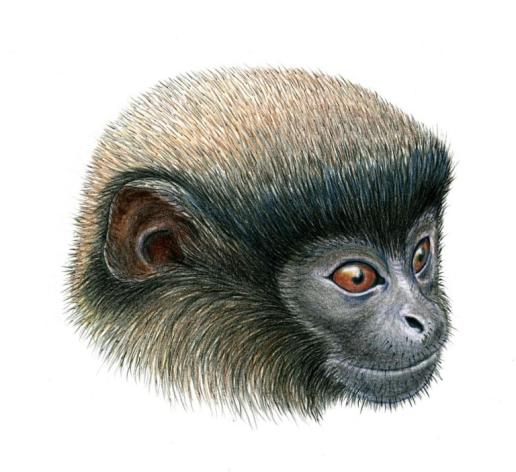
NEW SPECIES OF SPIDER ORCHID
New species of spider orchids have been discovered ranging from Geraldton to Esperance by the WA Herbarium. They add to the already spectacular array of wildflowers which thrive in the biodiversity hot spot of the South West.The WA Herbarium has named 17 new spider orchids, from north of Geraldton to east of Esperance.
Kevin Thiele is the curator of the Herbarium. Finding and naming plants is always exciting and fulfilling, he says.
Some of the rarest were discovered near Busselton.
The spider orchid genus Caladenia is one of the most varied of the WA orchids, Kevin told South West Mornings.
"Some of them are very spidery. Some are really weird. Some have shorter petals and various colours. Some of them actually look like insects.
"The classic spider orchids have long filamentous petals, 10cm or more long and are often coloured white or pink. One of the five spreading petals usually curls over the top. -READ MORE-http://www.abc.net.au/local/photos/2015/08/21/4297849.htm
Subscribe to:
Posts (Atom)