Saturday, 3 February 2018

Rare 200 million-year-old ichthyosaurus fossil discovered in a private collection two decades after it was uncovered is only the second example of its species ever found

A rare 200 million-year-old fossil of a marine reptile that lived alongside the dinosaurs has been identified more than two decades after it was discovered.
The ichthyosaur, whose name translates as 'fish lizards' from ancient Greek, were widespread during the Mesozoic Era.
Ichthyosaurs recently featured in the BBC documentary Attenborough And The Sea Dragon and their remains have been discovered as far afield as the Americas, Europe and Australia. 
The newly identified fossil, originally found in a quarry in northern Somerset in 1996, is only the second example of a recently discovered species of ichthyosaur.


Read more: http://www.dailymail.co.uk/sciencetech/article-5339619/Rare-200-million-year-old-fossil-marine-reptile-found.html#ixzz55OMS0k50
Follow us: @MailOnline on Twitter | DailyMail on Facebook

New species of lizard discovered

Sitana attenboroughii has been named after Sir David Frederick Attenborough

The coastal belt of Thiruvananthapuram is home to many rare species of animals, a discovery by a group of researchers has proved.
The team had discovered a new species of fan-throated lizard, belonging to the genus Sitana, from Poovar during an expedition that was undertaken during September-October 2016. The finding has now been published in the latest issue of peer-reviewed journal Zootaxa.
The researchers’ team comprises Kalesh Sadasivan and M. Ramesh, representing the Thiruvananthapuram-based Travancore Nature History Society, and Jafer Palot of the Western Ghats Regional Centre of the Zoological Survey of India in Kozhikode. They collaborated with Mayuresh Ambedkar and Zeeshan A. Mirza of the National Centre for Biological Sciences, Bengaluru, for =read more

Terrifying 'Freddy Krueger slasher wasp' comes equipped with a built-in SAW that the parasitoid uses to slice its way out of its host

A terrifying new species of wasp comes equipped with a built-in saw that rivals the claw-like blades of slasher movie murderer Freddie Krueger.
The parasitoid insect sports a series of jagged spines along its back, which it uses to slice its way out of its host.
No bigger than a sesame seed, the tiny wasp is found in Costa Rica, but has never been spotted in the wild.


Read more: http://www.dailymail.co.uk/sciencetech/article-5344901/Terrifying-Freddy-Krueger-wasp-sports-built-SAWS.html#ixzz55OLhQq00
Follow us: @MailOnline on Twitter | DailyMail on Facebook
200 million-year-old ichthyosaur species discovered

A rare 200 million-year-old ichthyosaur species has been discovered from a private collection, 22 years after it was originally found. 
Ichthyosaurs were a type of sea-going reptiles that lived during the time of the dinosaurs. 
In 2016, Dean Lomax from the University of Manchester in the UK described an ichthyosaur skeleton that he had examined in the collections of Leicester's New Walk Museum and Art Gallery.
He spotted several unusual features of the bones and determined that the features were unique and represented a new species, which he called Wahlisaurus massarae. "When Wahlisaurus was announced, I was a little nervous about what other palaeontologists would make of it, considering the new species was known only from a single specimen," Lomax said.
"My analysis suggested it was something new, but some palaeontologists questioned this and said it was just 'variation' of an existing species," he said. =READ MORE

Dinosaur and Ancient Mammal Stomping Ground Found in NASA Parking Lot

In 2012, amateur paleontologist and dinosaur track aficionado Ray Stanford headed out to lunch with his wife Sheila, an information specialist at the Goddard Space Flight Center in Greenbelt, Maryland. After dropping her off back at work, he noticed a chunk of rock sticking out of a nearby hill that was the exact same color as a piece he had found several years ago that contained a small dinosaur print. As Kenneth Change at The New York Times reports, the tip of the rock led to the discovery of an 8.5-foot long slab of sandstone with roughly 70 tracks from eight different species. 
The rock dates back roughly 100 million years, and includes traces from both mammals and dinosaurs. It is one of the largest such concentrations of tracks ever found. Stanford and researchers from NASA/Goddard, University of Colorado, and Calvert Marine Museum published an analysis of the slab this week in the journal Scientific Reports.
“The concentration of mammal tracks on this site is orders of magnitude higher than any other site in the world,” co-author Martin Lockley, paleontologist with the University of Colorado, Denver, says in a

Read more: https://www.smithsonianmag.com/smart-news/dinos-and-early-mammals-romped-nasas-doorstep-180968023/#pTqBW4MPtxAjOJpT.99
Give the gift of Smithsonian magazine for only $12! http://bit.ly/1cGUiGv
Follow us: @SmithsonianMag on Twitter

10-year-old boy leads scientists to 90-million-year-old fish species discovery

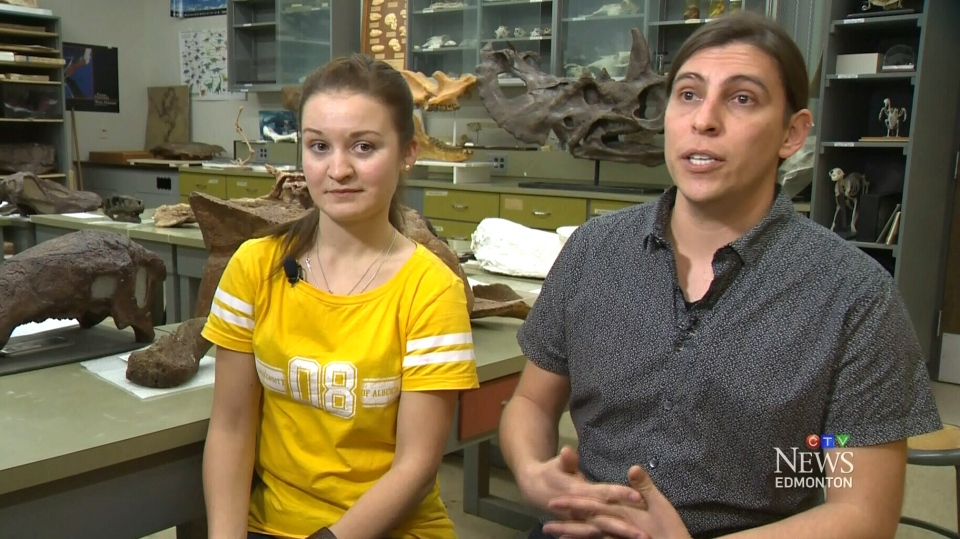
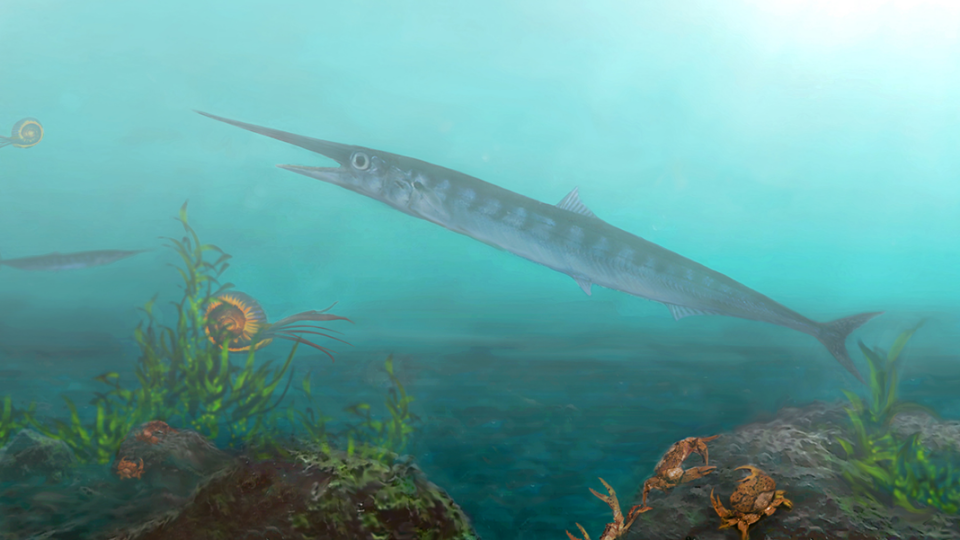
Paleontologists from the University of Alberta have discovered a 90-million-year-old species of fish, all thanks to the help of a 10-year-old boy who accidentally stumbled across a fossil.
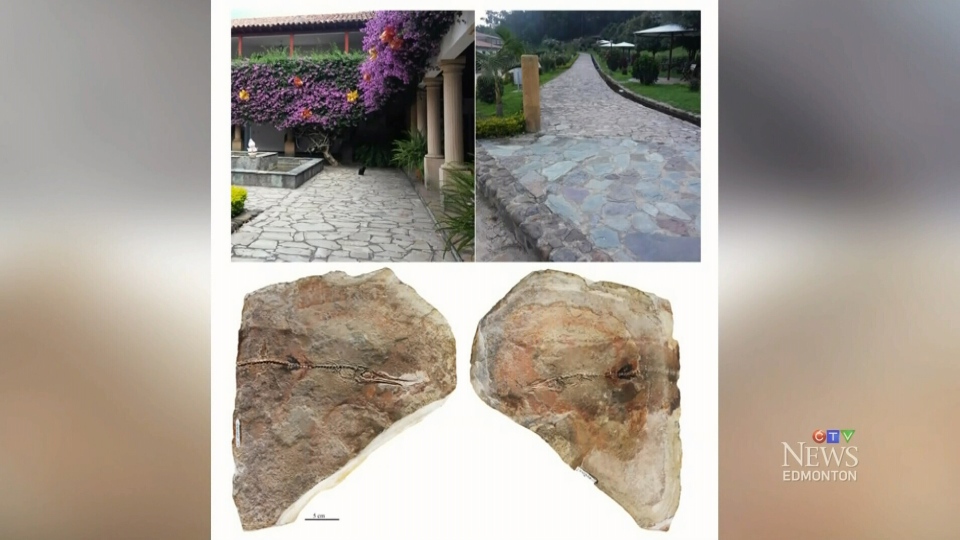
The child was on a tour at the Monastery of La Candelaria in Colombia, when he noticed something strange on the ground: the shape of a fish in the flagstones.
The boy snapped a photo and showed it to staff at the Centro de Investigaciones Paleontologicas, a local museum that works with the University of Alberta to protect and study regional fossil discoveries. The centre quickly recognized the bizarre shape for what it was: a nearly perfect, intact fossil of an ancient fish.
The staff then shared their findings with the University of Alberta. 
"After looking at some images we recognized the importance of the discovery: an entirely brand new group of fish, never seen before in North and South America, and with a few representatives worldwide," Javier Luque, PhD candidate at the University of Alberta and co-author of a study on the fossil, told CTV Edmonton.=READ MORE

New aquatic species found in Chhattisgarh cave

Raipur: In a path-breaking finding, a scientist has discovered three new aquatic species of the prawn family in the famed Kotumsar cave of Chhattisgarh, believed to be four million years old.
The cave may hold clues to evolution of known and unknown faunal species, say experts.
The new amphipod crustacean species (akin to prawn in appearance), christened zoologically as Kotumsaria bastarensis has been found in one of the tiny water pools in the nearly one-km-long cave, =READ MORE