A recent discovey by researchers at the University of Queensland,
Australia, reveal a tiny kangaroo species that was unable to hop.
Findings have been published in the Journal of Vertebrate Paleontology.
A recent discovey by researchers at the University of Queensland,
Australia, reveal a tiny kangaroo species that was unable to hop.
Findings have been published in the Journal of Vertebrate Paleontology.Researchers at The University of Queensland, have revealed an ancient and extinct kangaroo fossil, found at the Riversleigh World Heritage Area in north-western Queensland, Australia. The ancient kangaroo fossil defines a new species of extinct, non-hopping kangaroos.
"They lived around 15-23 million years ago and were the size of very small wallabies or pademelons," University of Queensland researchers Kaylene Butler said, according to a press release. The kangaroo species also moved on all four legs and were situated in a densely forested habitat.=read more =http://www.hngn.com/articles/181988/20160224/new-species-found-kangaroos-hop.htm

 A 90-million-year-old fossil fish, which has been on display at the
Perot Museum of Nature and Science in Dallas, turns out to be a new
species. Research conducted by Kenshu Shimada, a doctorate professor at
DePaul University in Chicago and research associate of the Sternberg
Museum in Kansas, reveals the 5.5-foot-long fossil fish to possess a
tuna-like body with a unique 'hook-shaped sail' on its back. The fish
has been given a new species name, Pentanogmius fritschi, in
honor of Joseph Fritsch, a local amateur collector who discovered the
fossil, dug it up with the help of another avid fossil collector, Kris
Howe, and donated it to the Perot Museum=read more =http://www.rdmag.com/news/2016/02/texas-fish-dinosaur-era-found-be-new-species
A 90-million-year-old fossil fish, which has been on display at the
Perot Museum of Nature and Science in Dallas, turns out to be a new
species. Research conducted by Kenshu Shimada, a doctorate professor at
DePaul University in Chicago and research associate of the Sternberg
Museum in Kansas, reveals the 5.5-foot-long fossil fish to possess a
tuna-like body with a unique 'hook-shaped sail' on its back. The fish
has been given a new species name, Pentanogmius fritschi, in
honor of Joseph Fritsch, a local amateur collector who discovered the
fossil, dug it up with the help of another avid fossil collector, Kris
Howe, and donated it to the Perot Museum=read more =http://www.rdmag.com/news/2016/02/texas-fish-dinosaur-era-found-be-new-species


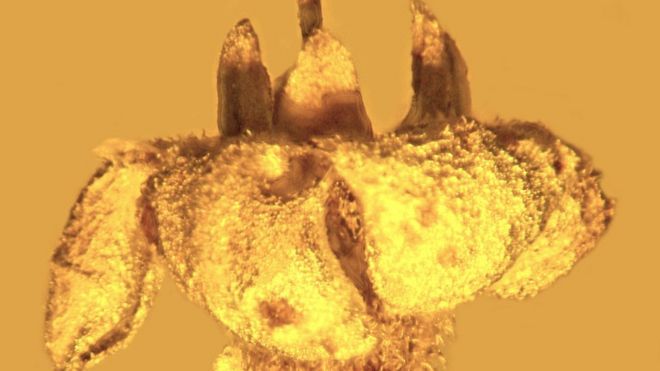

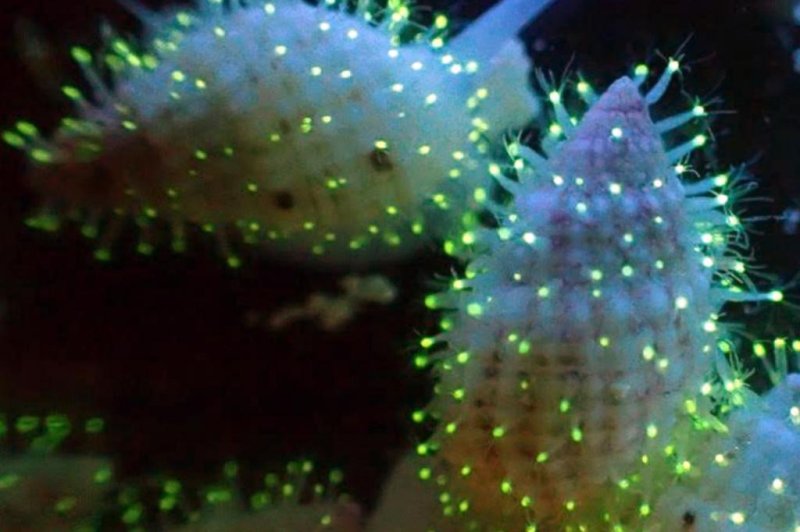
 While studying the abundant, yet poorly known fauna of the zoantharian Epizoanthus genus in the Indo-Pacific Ocean, Japanese graduate student Hiroki Kise and Dr. James Davis Reimer, both affiliated with University of the Ryukyus, Japan, focused on examining the species living on eunicid worm tubes. These Epizoanthus species form colonies and are only found living on the outside surfaces of tubes in which the eunicid worms live. Although these zoantharians often live in areas that are deeper than the range of SCUBA divers and tend to be indistinguishable on the outside, the present research, published in the open-access journal ZooKeys, reports the discovery of two new species.
Both new species have been found in low-light environments. While one of the species, scientifically named Epizoanthus inazuma, showed preference for coral reef slopes, reef floors, or the sides of their overhangs in Okinawa, the other one, E. beriber was seen to tolerate cave environments exclusively, and is found in Palau and Papua New Guinea. To recognise them as new species, the researchers turned to molecular analyses combined and compared to =read more=http://www.eurekalert.org/pub_releases/2016-02/pp-tnz021116.php
While studying the abundant, yet poorly known fauna of the zoantharian Epizoanthus genus in the Indo-Pacific Ocean, Japanese graduate student Hiroki Kise and Dr. James Davis Reimer, both affiliated with University of the Ryukyus, Japan, focused on examining the species living on eunicid worm tubes. These Epizoanthus species form colonies and are only found living on the outside surfaces of tubes in which the eunicid worms live. Although these zoantharians often live in areas that are deeper than the range of SCUBA divers and tend to be indistinguishable on the outside, the present research, published in the open-access journal ZooKeys, reports the discovery of two new species.
Both new species have been found in low-light environments. While one of the species, scientifically named Epizoanthus inazuma, showed preference for coral reef slopes, reef floors, or the sides of their overhangs in Okinawa, the other one, E. beriber was seen to tolerate cave environments exclusively, and is found in Palau and Papua New Guinea. To recognise them as new species, the researchers turned to molecular analyses combined and compared to =read more=http://www.eurekalert.org/pub_releases/2016-02/pp-tnz021116.php

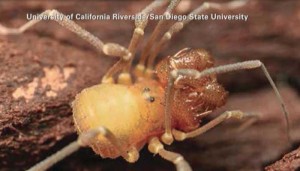 Scientists have discovered a new species of arachnid and they’re being described as a monster species. They’re called Crypto-Master Behemoths.
They look like spiders, but they’re actually classified separately by biologists. Scientists say they’re closely related to spider-like arachnids sometimes called Daddy Longlegs.
Biologists searched across several states in the U.S. and finally found the Crypto-Masters in Oregon’s mountainous regions.
Even though they look scary, scientists say this species is actually harmless to people.
Scientists have discovered a new species of arachnid and they’re being described as a monster species. They’re called Crypto-Master Behemoths.
They look like spiders, but they’re actually classified separately by biologists. Scientists say they’re closely related to spider-like arachnids sometimes called Daddy Longlegs.
Biologists searched across several states in the U.S. and finally found the Crypto-Masters in Oregon’s mountainous regions.
Even though they look scary, scientists say this species is actually harmless to people.